| Sign In | Join Free | My ecer.com.ru |
|
| Sign In | Join Free | My ecer.com.ru |
|
| Categories | Printing Equipment |
|---|---|
| Price: | 30000-1000000USD/set |
| Origin: | ChangSha |
| Delivery Time: | 15-30 work days |
| Packaging Details: | wooden box / metal box |
| MOQ: | 1Set |
| Trademark: | Weiboma & Duote |
| Payment Terms: | T/T |
| Company Info. |
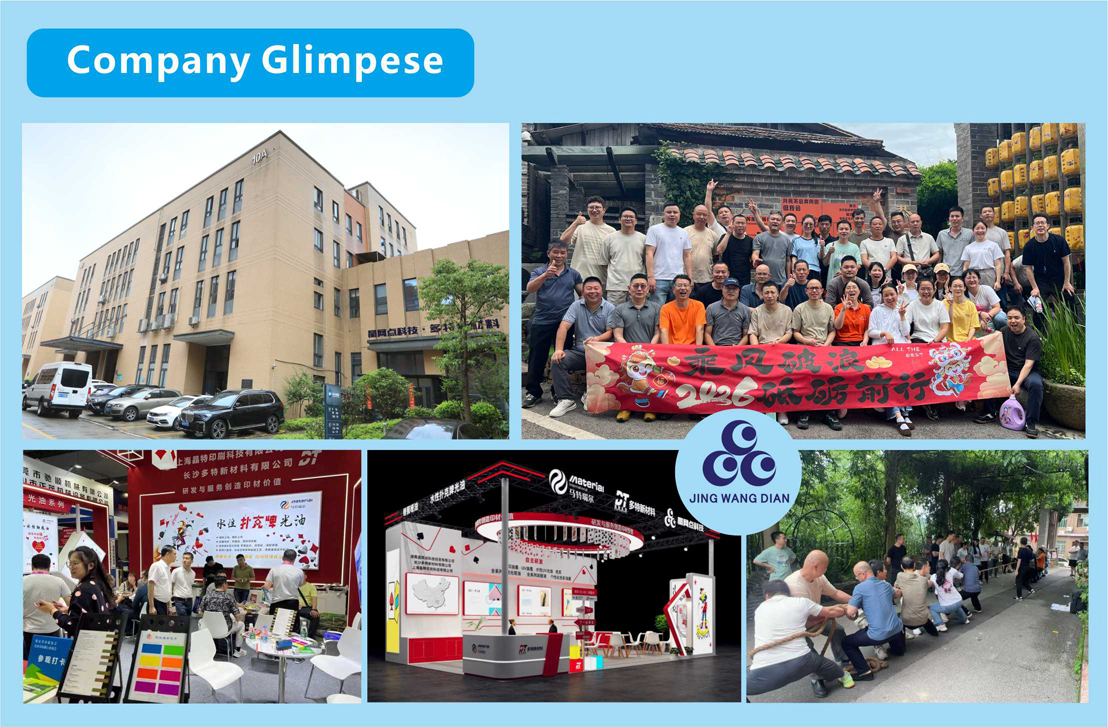
| Hunan Jingwangdian Technic & Trade Company |
| Verified Supplier |
| View Contact Details |
| Product List |
Used printing press, used printing equipment, used offset printing press, used digital printing press, used label printing press
We supply a wide range of used printing equipment and post-press supporting equipment for a long time, covering full-series models such as offset printing presses, digital printing presses, flexo printing presses, gravure printing presses, die-cutting machines, laminating machines, hot stamping machines, box gluing machines, folding machines and book binding machines. All equipment comes from regular manufacturers and formal channels, and has undergone professional disassembly, cleaning, testing, debugging, refurbishment and trial operation to ensure normal operation, stable performance and good appearance, which can be directly put into production on the machine. Suitable for various printing enterprises engaged in packaging printing, book and periodical printing, label printing, carton printing, advertising graphics, etc., it is especially suitable for small and medium-sized printing factories, start-up enterprises and those in need of production expansion and upgrading, realizing efficient production with lower investment, greatly reducing the initial investment cost and achieving faster cost recovery.
1. High Cost Performance, Low Investment Cost:
Under the same production capacity, the price is only 30%–70% of
that of new machines, greatly reducing the initial investment and
easing financial pressure.
2. In-Stock and Ready to Use, Short Production Cycle:
After professional maintenance and debugging, it can be put into
production quickly after delivery and installation, without waiting
for the production and scheduling of new machines.
3.Complete Models, Wide Selection Range:
From single-color, two-color, four-color, five-color to multi-color
units, from small format to full-sheet large format, one-stop
procurement of offset printing and post-press equipment is
available.
4.Performance Proven by the Market:
Mainstream brand models are mature and stable, with low failure
rate, easy access to accessories and convenient maintenance, which
is more worry-free than new models.
5.Professional Refurbishment, Reliable Condition:
High-quality used equipment will be refurbished by replacing
wearing parts, correcting pressure, cleaning oil circuits and
calibrating overprinting, achieving a use effect close to that of
new machines.
6.Low Depreciation Rate, Flexible Resale:
The price of used equipment is relatively stable, with small loss when resold after several years of use, and lower investment risk.
How to choose:
1.Clarify Your Own Needs:
Select corresponding models according to products (packaging/books
and periodicals/labels), format, number of color groups and
production capacity, and do not blindly pursue high configuration.
2.Prioritize Mature Big Brands:
Such as Heidelberg, Komori, KBA, Roland, Mitsubishi, etc., which
are durable, easy to find accessories and familiar to maintenance
masters.
3.Check the Production Year and Service Time:
The closer the production year and the less working hours, the
better the equipment condition; avoid purchasing machines that have
been in service for too long or have been idle and damp for a long
time.
4.On-Site Trial Operation, Key Inspections:
- Printing overprint precision, whether there is ghosting, ink bars
or paper feeding skew
- Operation of feeder, delivery, clutch pressure, dampening rollers
and ink rollers
- Whether gears, bearings and guide rails are severely worn
- Whether the circuit, air circuit and oil circuit are normal
5.Understand Maintenance History and Condition:
Machines with regular maintenance have a low failure rate; for
equipment that has undergone major repairs, the maintenance quality
must be confirmed.
6.Confirm Accessories and After-Sales Service:
Prioritize merchants that can provide installation, debugging,
training and short-term warranty for more guaranteed later service.
7.Balance Budget and Cost Performance:
Do not covet ultra-low-priced problematic machines, nor blindly buy high-priced almost new machines; choose the most suitable appearance and configuration according to production volume.
How to use:
1.Installation and Positioning: Fix the equipment horizontally, connect power and air, check
oil-water separation, and ensure stable voltage.
2.Comprehensive Inspection Before Startup: Add oil to lubrication points, check chains, belts and gears, and
clean the feeder and paper channel.
3.No-Load Test Run: First run at low speed without load, listen for abnormal noise and
vibration, and observe whether the air circuit and clutch pressure
are normal.
4.Formal Printing Debugging: First adjust the paper feeding to be smooth, then adjust the
ink-water balance and overprint precision, and gradually increase
the speed.
5.Standard Daily Maintenance:
- Clean ink, paper scraps and spray powder every day
- Regularly add lubricating oil, replace hydraulic oil and engine
oil
- Keep the workshop dry and dust-proof to avoid circuit dampness
6.Use Reasonably, Avoid Overload: Do not run at high speed for a long time, and do not print paper
beyond the machine specifications to extend the service life.
7.Handle Small Faults in Time: Repair small problems such as abnormal noise, overprint drift and
unstable paper feeding in time to avoid expanding into major
faults.





Q1. Are used printing presses reliable? Will they break down
frequently?
Used models from formal channels and professional maintenance are
very reliable. Mature models of big brands have a low failure rate,
and can be used stably for many years as long as they are well
maintained. Machines with low-price refurbishment and hidden faults
have relatively high risks.
Q2. How to judge whether the machine has hidden faults?
1.Print dozens of sheets to check overprint, dots, whether there
are ink bars and ghosting
2.Test high-speed paper feeding to see if the feeder is not smooth
or paper jams occur
3.Check whether gears and bushings are worn with large gaps
4.Check whether the circuit is messy and whether there are
maintenance traces. It is best to bring a professional maintenance
master for on-site inspection.
Q3. Is there a warranty for used equipment?
Regular merchants generally provide 1–3 months of on-installation
warranty, and wearing parts are not covered by the warranty.
Personal transfers usually have no after-sales service, so be sure
to conduct a thorough trial operation before purchase.
Q4. How to calculate the freight and installation cost of used
printing presses?
Generally, the buyer bears the freight, and some merchants can
provide installation, debugging and training. Large-scale equipment
requires professional disassembly, hoisting and transportation to
avoid collision and damage.
Q5. What scams should I pay attention to when buying used equipment?
- Attract with ultra-low prices, not allowing trial operation or
on-site viewing
- Concealing major faults, covering up wear and tear through
refurbishment
- False brand and false production year. Suggestion: View and test
the machine on site, sign a contract and keep certificates.
Q6. Are accessories for old machines easy to buy?
Accessories for mainstream brands (Heidelberg, Komori, etc.) are
very common and can be bought anywhere in China; accessories for
unpopular old models may be difficult to find, so try to avoid them
when purchasing.
Q7. Can used equipment be exported?
Yes, it can be exported. Most merchants can provide packing,
fumigation, customs declaration and logistics services, suitable
for procurement by overseas printing factories.

|
 Intelligent CTP Plate Making Machine High Definition
The Offset CTP Plate Making Machine Digital Plate Making Equipment Automatic
Stable Structure Paper Pile Turner Paper Stack Flipper Easy Maintenance
Rapid LED UV Curing Equipment UV LED Light Curing Machine Intelligent Control
Automated Offset Printing Press Blanket Cleaning Machine Stable
Wear Resistance Printing Rubber Rollers Anilox Rollers Customizable
Plate Free Digital Printing Machine Quick Digital Printing Equipment
Automatic Anilox Roller Cleaning Machine Ultrasonic Anilox Cleaning Machine Energy Saving
Fully Automatic PS Plate Processor Machine CTP Plate Processor High Efficiency
High Precision AI Paper Counting Machine Intelligent Paper Counting Equipment
Intelligent CTP Plate Making Machine High Definition
The Offset CTP Plate Making Machine Digital Plate Making Equipment Automatic
Stable Structure Paper Pile Turner Paper Stack Flipper Easy Maintenance
Rapid LED UV Curing Equipment UV LED Light Curing Machine Intelligent Control
Automated Offset Printing Press Blanket Cleaning Machine Stable
Wear Resistance Printing Rubber Rollers Anilox Rollers Customizable
Plate Free Digital Printing Machine Quick Digital Printing Equipment
Automatic Anilox Roller Cleaning Machine Ultrasonic Anilox Cleaning Machine Energy Saving
Fully Automatic PS Plate Processor Machine CTP Plate Processor High Efficiency
High Precision AI Paper Counting Machine Intelligent Paper Counting Equipment

